The idea that some are more wealthy–sometimes much more wealthy–than others is very disturbing to the Left. They believe they hold the moral position with their policies because they are working toward equality. The problem is that it is not fair or just to enforce an equality of outcome because, by necessity, you will need to take by force what some people have worked for. People have different abilities and ambitions which necessarily lead to different outcomes if they’re free to create what they like. The only way to prevent this is to do something very ugly indeed.
I’ve been reading Solzhenitsyn’s Gulag Archipelago (the insider’s scoop on the Soviet Union in the first half of the 20th century), and came across a perfect (albeit extreme) illustration of the folly of this approach:
The land was allocated in accordance with the number of “mouths” per family, equally. It had been only nine years…. Then suddenly there were kulaks [those who were doing well] and there were poor peasants. How could that be? Sometimes it was the result of differences in initial stock and equipment; sometimes it may have resulted from luck in the mixture of the family. But wasn’t it most often a matter of hard work and persistence? And now these peasants, whose breadgrain had fed Russia in 1928, were hastily uprooted by local good-for-nothings and city people sent in from outside…. [T]hey began to round up the very best farmers and their families, and to drive them, stripped of their possessions, naked, into the northern wastes, into the tundra and the taiga. [Emphasis mine]
But this approach is not only morally problematic (even in much less extreme cases), it is also deadly for the economy.
And so it was that these two terms [for the peasants who worked hard and succeeded and those who were perceived as helping them] embraced everything that constituted the essence of the village, its energy, its keenness of wit, its love of hard work, its resistance, and its conscience. They were torn up by the roots–and collectivization was accomplished.
It was accomplished, but the price was catastrophic. Not only does the enforcement of equality necessarily squelch the virtues that improve the conditions for everyone–virtues we ought to be encouraging for economic growth, but the result of squelching those virtues is economic disaster for everyone. In the Soviet Union’s case, a famine quickly followed. In every case, when you become envious of the rich and attempt bring them down, everyone is hurt, especially the poor. We shouldn’t expect any less from a policy approach rooted in one of the Ten Big Ones.
The Soviet Union hated the idea that some people earned more than others, regardless of the fact that the abundance of an industrious subset increased the standard of living for all. They would rather everyone be equal together in famine than that some would have more than others with no famine. Though the Left in America is obviously not as extreme, you often hear echoes of this ideology, and to the extent that it is carried out, it will be similarly destructive here (e.g., see here where the idea that “the people who have wealth are entitled to keep it” is called a “simplistic notion” (forced “sharing” being the remedy), or here where Pres. Obama says that he’ll increase the capital gains tax, regardless of the fact that this will reduce tax revenue because he is interested in “fairness,” not revenue).
Envy is powerful and can make people do strange things. And when that envy is couched in language of “compassion” it is almost unstoppable. Nobody wants to sound like the bad guy who is against “compassion.” But if history has anything to tell us, the Left has neither the moral position, nor the one that will most help the poor.
 Posted in Amy's Posts, Politics
  6 Comments »
 May 25, 2009 Posted by Roger Overton
 closeAuthor: Roger Overton
Name: Roger Overton
closeAuthor: Roger Overton
Name: Roger Overton
Email: rogeroverton@hotmail.com
Site: http://ateamblog.com
About: Roger Overton is currently pursuing a Masters degree at Talbot School of Theology. He has addressed various churches, schools and youth camps throughout the United States. Roger was co-editor of The New Media Frontier (Crossway, 2008) and God and Governing (Wipf & Stock, 2009).
Roger can be emailed at rogeroverton@hotmail.com.See Authors Posts (570)
Apparently I’m one of the few viewers who generally liked how last week’s season finale of 24 wrapped up the Season 7 plot. From its beginning, 24 has portrayed excellent writing that provokes reflection on some of the most controversial topics of our day. I still believe 24 is one of the best shows on television.
However, I do agree with many other viewers that there was a troubling scene toward the end of last week’s finale. Jack Bauer believes he’s about to die, so he calls his new Muslim friend Gohar (they met a few hours earlier and seemed to bond somewhat quickly). Gohar is Imam, a leader at a local mosque. In Jack’s apparent final hours, he turns to Gohar for spiritual counsel…
Bauer: I made so many mistakes. I always thought I’d have the time to correct them.
Gohar: You have the time right now.
Bauer: (tears welling up) You don’t know what I’ve done.
| Gohar: We live in complex times, Mr. Bauer. Nothing is black and white. But I see before me a man with all his flaws and all his goodness. Simply a man.
(Gohar prays)
Let us both forgive ourselves for all the wrongs we have done.
Bauer: Thank you. |
 |
(transcript HT: PJM)
When I first saw this, I said, “Don’t make Jack become a Muslim!” But that fear soon subsided as I realized Gohar didn’t even bother to try to convert Jack. He didn’t mention Allah or the teachings of Islam, nor is it all at clear whom he was praying to. I’m not an expert on Islam, but as far as I can tell, this may be a somewhat accurate reflection of what an Imam might do in this situation. Islam is a works based religion, and forgiveness is only given in the end if one’s good works outweigh the bad they have done. Gohar could not offer Jack forgiveness, he could only express that Jack has a chance because he has done some amount of good in his life. If Jack wanted the assurance of forgiveness prior being judged by Allah, he would have to find it in himself.
Whether or not the writers understood all of this, we really can’t say. Regardless, this scene also betrays the writers’ belief in the common theology of our times. Jack understood that he did things in his life that were morally wrong and something had do be done about that. He felt guilty because he is guilty. Jack’s problem is the problem common to everyone who does not trust in Jesus for their salvation- he believes he can save himself. He said he thought he would have time to correct his mistakes, and he apparently agreed with Gohar’s prayer and believes he can forgive himself. The writers probably believed that this would resonate with viewers and many of them would be satisfied with this resolution of Jack’s spiritual and moral crisis.
Of course, those of us who have entrusted ourselves to Christ’s work instead of our own recognize that Jack can do nothing to save himself. Any attempts to correct his mistakes or forgive himself are in vain and an affront to the supremacy of God. We have the responsibility as Christ’s ambassadors to relate the offense of the gospel at this point. Our so-called “tolerant” society cannot tolerate a Savior who tells them they cannot save themselves, though He would save those who believe in Him. The common theology of our times is a powerful mechanism for self-deception and self-aggrandizement.
Jack Bauer is, of course, a fictional character. But the writers and viewers who hold to the common theology are not. There are people all around us attempting to earn their way to heaven through what they believe are good works, and though they feel the pang of guilt, they reassure themselves that they’re okay because they’re not as bad as “that guy.” Hopefully this scene has presented opportunities to discuss true salvation and can act as call on us Christians to re-double our efforts in preaching that Jesus is the only way to the Father.
Posted in Culture, Roger's Posts 1 Comment »
May 24, 2009 Posted by David N closeAuthor: David N
Name:
closeAuthor: David N
Name:
Email: dvnilsen@gmail.com
Site: http://reasonfromscripture.blogspot.com
About: In 2003 I graduated from high school with no set direction for my life. I spent a year in Iowa before returning to California to attend Junior College. I changed majors 3 times; from Physics to Business to Film (as you can see, no direction). I was a Christian, attending church regularly, but furthering the cause of Christ in this fallen world was not a high priority.
In 2005 I picked up an issue of TableTalk magazine, and I was re-introduced to the work of R. C. Sproul (whom I had read once in high school). Later that year, while taking a biology class with an ardent atheist professor, I picked up a copy of Lee Strobel's "The Case For A Creator." In the Fall of 2006 I came to Biola University and was introduced to the works of J. P. Moreland and John Mark Reynolds. My fate was sealed.
Just a few years ago, I was passionless. Now I have two passions: Studying the Word of God and engaging in the task of Apologetics. 1 Peter 3:15 exhorts all Christians to be ready to give an answer for the hope that we have. My goal is to be able to give my answer articulately and powerfully, but even more importantly, in love. There are many purposes for apologetics, but by far the most important is the opening of minds and the softening of hearts for the work of the Holy Spirit. If we don't care about and pray for those with whom we engage in apologetics, we fail to fulfill this purpose. As a wise man once said, "Take a stand for the Truth, but do it in love fool!"
Education Info:
--Currently: M.A. in Historical Theology student, Westminster Seminary California
--2008: B.A. in Philosophy, Biola University
--2006: A.A. in Liberal Arts, Palomar CollegeSee Authors Posts (75)
On the self-attesting power of Scripture:
Read Demosthenes or Cicero, read Plato, Aristotle, and others of that tribe. They will, I admit, allure you, delight you, move you, enrapture you in wonderful measure; but turn from them to the reading of the Sacred Scriptures. Then, in spite of yourself, it will so affect you, so pierce your heart, so work its way into your very marrow, that, compared with its deep impression, such vigor as the orators and philosophers have will nearly vanish. Consequently, it is easy to see that the Sacred Scriptures, which so far surpass all gifts and graces of human endeavor, breathe something divine.
–John Calvin, Institutes of the Christian Religion
Posted in David's Posts, Poetry/Scripture/Liturgy/Etc. No Comments »
“If God is good and all-powerful, why is there so much evil?”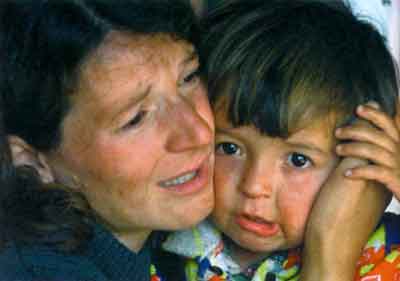
The problem of evil in Christian theology has received much attention, both from those within the faith as well as from objectors outside the faith. In the former category, many fine Christian minds have applied themselves to offering theodicies – justification of the presence of evil in a world created by a good and all-powerful God – that seek to philosophically address this problem of evil, both natural evil (death and suffering caused by events in the natural world, such as tsunamis, earthquakes, and diseases) and moral evil (death and suffering caused by human actions). Many of these arguments are philosophically sound, but (in my opinion) biblically unsupported, and ignore certain key texts that should be informing a Christian response to this challenge. This post is just a small contribution that seeks to remedy this tendency.
First of all, I think the problems of natural evil and moral evil are to some extent distinct, and should be treated as such. I’d like to propose an answer to the problem of natural evil based on (a necessarily brief) biblical exegesis, specifically of Romans 8. The answer I arrive at may or may not sit well with our human-centered sensibilities, but I’m trying to be faithful to God’s Word and let Scripture determine my apologetic. I think the Bible speaks directly to this issue, and we should listen.
Romans 8 begins with the conclusion of Paul’s preceding argument: that because of justification by faith, those who are in Christ Jesus are no longer condemned, being set free as we are from the law of sin and death (btw, there’s a direct line connecting those two things together). We are therefore indwelt by the Spirit of God, our spirits made alive by him, even though our bodies, our flesh, is still corrupted and “dead.” However, because of the Spirit of God living in us, we do not need to live in slavery to the corrupt nature of our flesh, but can continuously put that to death by walking in the Spirit, in the hope that God will redeem our bodies (sarx) just as He has redeemed our spirit (pneuma). Then, at verse 16, we read:
16The Spirit Himself testifies with our spirit that we are children of God,
17and if children, heirs also, heirs of God and fellow heirs with Christ, if indeed we suffer with Him so that we may also be glorified with Him.
18For I consider that the sufferings of this present time are not worthy to be compared with the glory that is to be revealed to us.
Notice here that there is an end, a purpose, a telos to our suffering as Christians – our future glorification with Christ. This end is so great, it makes all the suffering totally incomparable and totally worth it. But it is not only us who were meant for or eagerly anticipate this end:
19For the anxious longing of the creation waits eagerly for the revealing of the sons of God.
“Creation” (singular) here could refer to mankind as a whole, a hypothetical man, or all of creation (the natural world). For reasons given below, I’m opting for the latter. Longing, then, would be somewhat of an anthropomorphism, along the lines of a restrained boulder “yearning” to roll downhill. Other translations render this as “eager expectation” which helps capture the word here, which literally means “to watch with the head stretched out” – there’s an end for which creation was created, and creation groans (see v. 22) for this end like a dam groaning under the weight of water that wants to flow down to the sea. This end is the “revealing of the sons of God” – the glorification of the adopted elect at the end of the age.
20For the creation was subjected to futility, not willingly, but because of Him who subjected it, in hope
21that the creation itself also will be set free from its slavery to corruption into the freedom of the glory of the children of God.
Just as man is a slave to corruption [a ruining of an original intent, a spoiling, decay] through sin, so is the natural world. This is described in v. 20 as subjection to futility, or uselessness; but it is a subjection or slavery imposed upon creation by God for a specific purpose: to be set free. The purpose is release/redemption, and without prior bondage and slavery, this would not be possible.
22For we know that the whole creation groans and suffers the pains of childbirth together until now.
Here, following the pattern of suffering while waiting for glorification in the life of believers, the suffering of the creation is likened to childbirth – something painful, damaging and dangerous, but with an end result – a new life in the world – that is worth it all. I can’t speak from experience here, but my wife says (and I’ve heard other women say the same) that a mother’s labor pains may be very bad, but the memory quickly fades after the child is born. “Until now” can here be understood not in the sense that the groaning and suffering has now ended, but that it is still happening up to this very day. Again, the suffering of the natural world is acknowledged, but it is not purposeless – it is to be redeemed in the end when our bodies are redeemed at the resurrection:
23And not only this, but also we ourselves, having the first fruits of the Spirit, even we ourselves groan within ourselves, waiting eagerly for our adoption as sons, the redemption of our body.
This is why I decided to understand “creation” as the natural world, and not mankind in general – the clear distinction here between creation and believers, plus the way “creation” is characterized as eagerly awaiting the glorification of believers (which would not be an accurate way to describe the unregenerate rest of mankind), eliminates the other possibilities.
24For in hope we have been saved, but hope that is seen is not hope; for who hopes for what he already sees?
25But if we hope for what we do not see, with perseverance we wait eagerly for it.
So, just as we suffer in expectation of redemption, so does the rest of creation. It is not something that has arrived yet, but it will. So the answer to, “If God is good and all-powerful, why is there so much natural evil?” based on Romans 8, is this: God did not purpose a perfect creation, but a redeemed creation, so the natural world has been made such that it produces pain and suffering, yet so that it may be redeemed with the children of God at the end of the age. If this answer doesn’t sit well, I’d suggest it is because we see how bad the suffering is, but don’t understand how good the redemption will be.
Posted in Aaron's Posts, Apologetics, Exegesis, Main Page, Theology No Comments »
May 19, 2009 Posted by Roger OvertoncloseAuthor: Roger Overton
Name: Roger Overton
Email: rogeroverton@hotmail.com
Site: http://ateamblog.com
About: Roger Overton is currently pursuing a Masters degree at Talbot School of Theology. He has addressed various churches, schools and youth camps throughout the United States. Roger was co-editor of The New Media Frontier (Crossway, 2008) and God and Governing (Wipf & Stock, 2009).
Roger can be emailed at rogeroverton@hotmail.com.See Authors Posts (570)
|
|
Those who care about the lives of the unborn have many reasons to be concerned these days. President Obama has revealed plans to rescind the “conscience rule,” which allows doctors to refuse to perform abortions on moral grounds. The opening of a seat on the Supreme Court during Obama’s administration leaves little doubt that Roe v. Wade will continue to be upheld in the coming years. Fortunately, the law is not the only way to seek the protection of the unborn. |
In The Case for Life: Equipping Christians to Engage the Culture Scott Klusendorf (President of Life Training Institute) provides compelling arguments and effective strategy for convincing people through conversation abortion is wrong. He begins his case by honing in on the core issue: what is the unborn? If it’s not human, then there’s little to no case against abortion. But if it is human, there is no excuse for ending its life. Scott extends this discussion to an explanation for why humans are valuable, and how these factors apply to the embryonic stem cell debate.
In the second part (of four) of the book, Scott moves on to examine some of the philosophical and theological issues wrapped up in the abortion debate. These include the objectivity of morality, whether it’s truly possible to be “morally neutral,” the rationality of Christianity, and what the Bible says about abortion. Scott takes the principles from the first half of the book into part three where he looks more closely at the art of fruitful conversation. He explains how to ask good questions (using Greg Koukl’s Columbo Tactic) and explores six varieties of objections and how to respond to them.
The final section of The Case for Life considers the role of pastors in the abortion debate, how anyone can help women (and men) who have played some part in an abortion, how pro-lifers of diverse religious backgrounds can work together for the cause of the unborn and what it will take to change hearts and minds on this critical issue. Scott leaves no stone unturned as he explains the value of visual aids and even offers a clear presentation of the gospel message.
Scott Klusendorf’s years of experience have supplied him with carefully constructed arguments and ample anecdotes to show how to effectively make a compelling case for the right to life of unborn human people. His own life and ministry provide an inspiring example of how to be compassionate yet firm with conviction when discussing such a sensitive issue. I cannot think of anyone who would not benefit from reading The Case for Life, as everyone from the seasoned pro-lifers to the uninformed or undecided, and even the seasoned pro-choicers, will find something worth thinking about. Some will find themselves returning to the book often to rehearse all the training this resource has to offer, and they will be richly rewarded.
**Amazon’s page for this book appears to have been corrupted. The book may also be ordered through Stand to Reason or directly from the publisher, Crossway.
Posted in Book Reviews, Roger's Posts No Comments »
May 18, 2009 Posted by Roger OvertoncloseAuthor: Roger Overton
Name: Roger Overton
Email: rogeroverton@hotmail.com
Site: http://ateamblog.com
About: Roger Overton is currently pursuing a Masters degree at Talbot School of Theology. He has addressed various churches, schools and youth camps throughout the United States. Roger was co-editor of The New Media Frontier (Crossway, 2008) and God and Governing (Wipf & Stock, 2009).
Roger can be emailed at rogeroverton@hotmail.com.See Authors Posts (570)
Welcome to The A-Team Blog sequel! We’ve put a bit of work into making this new place look nice with some cool new features, so we’re glad you could join us here. There’s a few new things, as well as a new person, so we’ll start with him…
Please welcome Aaron Snell to The A-Team Blog! Those who’ve read our blog for awhile have seen him add his (wise and insightful) two cents to the comments of our posts for some time. He’s the father of two homeschooled kids, a former church elder and a student in Biola’s MA in Apologetics program. I should also point out that though his wife is named Amy, she is not the Amy who blogs here. Aaron’s fairly smart, and he enjoyed watching Batman Begins, so I think he’ll fit in well here 
As far as new features go, there’s a few I’ll draw your attention to:
Facebook Connect: A long time ago, in blogs far far away, users typically had to register an account for every blog (such as the old A-Team Blog) they visted. Those days are passing due to tools like Facebook Connect. Simply use your Facebook username and password to log into our blog and you’re done. You can comment and make all the noise you want. If you don’t have a Facebook account, you can register an account on our blog the old fasion way via the Register link.
Twitter: The A-Team Blog is now on Twitter. Our posts will automatically update to our Twitter status, and we’ll occasionally share brief thoughts there. Feel free to follow us!
Comments: Not a new feature, but something I should explain as we’ll likely be asked about it. When importing our old blog over here, comment author names were dropped. So if you look back through our archives, every comment will say it was by “Anonymous.” I’ve updated the last few months with the correct author names, but none of us have the desire to update all 3,291+ comments we’ve received over the years with the correct names. So it is what it is.
Blogroll: The blogroll showing in our sidebar is actually a feed of the last 10 updates from blogs on our blogroll. So blogs that are more active will show up there more often. You can view our complete blogroll via the “Links” button at the top, as well as a list of ministries we like.
ShareThis: At the bottom of every post is a “ShareThis” button. This will easily allow you to alert others to the post via Digg, Facebook, email or dozens of other means.
Well, that’s about it. Please let us know what you think, if you have any suggestions, if you see something that doesn’t look right, or if you just really want to try out some of the new features by leaving a comment
Posted in Roger's Posts 5 Comments »
April 17, 2009 Posted by Roger OvertoncloseAuthor: Roger Overton
Name: Roger Overton
Email: rogeroverton@hotmail.com
Site: http://ateamblog.com
About: Roger Overton is currently pursuing a Masters degree at Talbot School of Theology. He has addressed various churches, schools and youth camps throughout the United States. Roger was co-editor of The New Media Frontier (Crossway, 2008) and God and Governing (Wipf & Stock, 2009).
Roger can be emailed at rogeroverton@hotmail.com.See Authors Posts (570)
Things have been a bit quite here of late. One of the reasons for that is that I’ve been editing another book. We’re finally to the point where I make the details public, so here it is!
God and Governing: Reflections on Ethics, Virtue and Statesmanship
Abortion. Poverty. Pornography. More than thirty years ago religious conservatives and liberals began fighting these and other problems head on. These past few decades have seen the popularity of groups such as the Moral Majority and The Christian Coalition that support numerous religious politicians and make even more promises. After all the potential for success, why is it that these social problems persist? How is it that evangelicals have been so ineffective at changing the political and social landscape of the United States in a positive way?
Based on a conference put together by Trinity Law School, God and Governing brings together theologians, politicians, law professors and cultural critics in order to examine some of the root causes of evangelical political failure over the past thirty years.
Contents:
Foreword: Charles Colson
Introduction: Roger N. Overton
Chapter One: Why Being Good is So Political by David F. Wells
Chapter Two: The Travails of Evangelical Politics by Paul Marshall
Chapter Three: The Golden Triangle of Freedom by Os Guinness
Chapter Four Lessons on Fleeing Temptation by Patrick Nolan
Chapter Five: The Future of Virtue and Statesmanship in Pagan America by Vishal Mangalwadi
Chapter Six: The Failure of Evangelical Political Involvement by Dallas Willard
Chapter Seven: Practical Ways Forward by Donald McConnell
Chapter Eight: A Trinitarian Model for Political Duty by Stephen Kennedy
God and Governing will be published by Wipf and Stock under their Pickwick Publications imprint as part of their Princeton Theological Monograph Series. Look for it around the end of 2009.
Posted in Main Page, Politics, Roger's Posts 1 Comment »
April 14, 2009 Posted by David NcloseAuthor: David N
Name:
Email: dvnilsen@gmail.com
Site: http://reasonfromscripture.blogspot.com
About: In 2003 I graduated from high school with no set direction for my life. I spent a year in Iowa before returning to California to attend Junior College. I changed majors 3 times; from Physics to Business to Film (as you can see, no direction). I was a Christian, attending church regularly, but furthering the cause of Christ in this fallen world was not a high priority.
In 2005 I picked up an issue of TableTalk magazine, and I was re-introduced to the work of R. C. Sproul (whom I had read once in high school). Later that year, while taking a biology class with an ardent atheist professor, I picked up a copy of Lee Strobel's "The Case For A Creator." In the Fall of 2006 I came to Biola University and was introduced to the works of J. P. Moreland and John Mark Reynolds. My fate was sealed.
Just a few years ago, I was passionless. Now I have two passions: Studying the Word of God and engaging in the task of Apologetics. 1 Peter 3:15 exhorts all Christians to be ready to give an answer for the hope that we have. My goal is to be able to give my answer articulately and powerfully, but even more importantly, in love. There are many purposes for apologetics, but by far the most important is the opening of minds and the softening of hearts for the work of the Holy Spirit. If we don't care about and pray for those with whom we engage in apologetics, we fail to fulfill this purpose. As a wise man once said, "Take a stand for the Truth, but do it in love fool!"
Education Info:
--Currently: M.A. in Historical Theology student, Westminster Seminary California
--2008: B.A. in Philosophy, Biola University
--2006: A.A. in Liberal Arts, Palomar CollegeSee Authors Posts (75)
I don't Twitter (or is it tweet?). But I can't claim total purity, since I have facebook, myspace, and I blog. Still, I've been purposefully avoiding the Tweet scene because it seemed to me to represent the worst of the other three. No genuine conversation or community whatsoever, just an endless flow of (mostly trivial) information.
I may rethink this position. Not only did Abraham Piper point out that a narcissist is a narcissist regardless of where he is or how he spreads his narcissism (i.e. the powers of Twitter can be used for both good and evil, it all depends on the person), but the boys at Middlebrow (the podcast of Scriptorium Daily) have brought up a point worth considering: If Christians are called to witness to the world and bring the gospel to the marketplace, and our marketplace is Twitter, isn't that exactly where we should go?
It certainly is. Christians who avoid new technologies and cultural trends altogether are not paying attention to the book of Acts. Meeting unbelievers where they are and speaking their language is essential to evangelism. But there's a danger lurking. I would not be the least bit surprised to hear someone advocating “Twitter church” pretty soon. This would be nothing new, of course. Evangelicals have been advocating a move away from traditional church structures to private religion for years. The point is that God knows what he's doing, and it's not up to us to decide to change the rules of the game.
Dr. Reynolds has noted that Christianity is a religion of a book, not a movie. This means that, however good it is that we are becoming more and more video literate as a culture, we can't allow our normal literacy to decline, because God isn't likely to send us an inspired DVD any time soon. As a Christian, being video literate is important for witnessing to a video culture, but we can't allow ourselves to lose the ability to read and interpret a written text. If we do, we will lose our only direct tie to the foundation of Christianity itself, the Word of God.
Likewise, Tweeting is not preaching. In the Old Testament, the Word of God was delivered to messengers called Prophets, who personally and incarnationally brought that Word to the people. In the Apostolic age, the Word was made flesh and the gospel of that Word was delivered by the Apostles through preaching. It is in hearing the preached Word that God has promised to meet his people, to create and increase faith, and to seal believers with the Holy Spirit. This simply can't happen on Twitter.
Just as we need to become more video literatre while not losing our ability to read and understand written texts, we must be careful not to let our increased Twitteracy diminish our ability to engange in genuine communication with real people in real community. The more we retreat into Twitter and other online communites, the less at home we will feel in true, physical communities (such as church). The body of Christ, like the Son of God Himself, is incarnational.
Posted in Culture, David's Posts, Main Page, New Media, Poetry/Scripture/Liturgy/Etc., Theology 2 Comments »
April 12, 2009 Posted by David NcloseAuthor: David N
Name:
Email: dvnilsen@gmail.com
Site: http://reasonfromscripture.blogspot.com
About: In 2003 I graduated from high school with no set direction for my life. I spent a year in Iowa before returning to California to attend Junior College. I changed majors 3 times; from Physics to Business to Film (as you can see, no direction). I was a Christian, attending church regularly, but furthering the cause of Christ in this fallen world was not a high priority.
In 2005 I picked up an issue of TableTalk magazine, and I was re-introduced to the work of R. C. Sproul (whom I had read once in high school). Later that year, while taking a biology class with an ardent atheist professor, I picked up a copy of Lee Strobel's "The Case For A Creator." In the Fall of 2006 I came to Biola University and was introduced to the works of J. P. Moreland and John Mark Reynolds. My fate was sealed.
Just a few years ago, I was passionless. Now I have two passions: Studying the Word of God and engaging in the task of Apologetics. 1 Peter 3:15 exhorts all Christians to be ready to give an answer for the hope that we have. My goal is to be able to give my answer articulately and powerfully, but even more importantly, in love. There are many purposes for apologetics, but by far the most important is the opening of minds and the softening of hearts for the work of the Holy Spirit. If we don't care about and pray for those with whom we engage in apologetics, we fail to fulfill this purpose. As a wise man once said, "Take a stand for the Truth, but do it in love fool!"
Education Info:
--Currently: M.A. in Historical Theology student, Westminster Seminary California
--2008: B.A. in Philosophy, Biola University
--2006: A.A. in Liberal Arts, Palomar CollegeSee Authors Posts (75)
Here are the prayers for Easter Sunday!
From the Lutheran Book of Prayer:
O almighty and eternal God, who through the death of Your Son has destroyed sin and death, and by His rising to life again restored innocence and everlasting life, that being delivered from the power of the devil, I might live under You in Your kingdom, grant that I may be forever comforted by true faith in the resurrection of Your dear Son. Do not let the thought of death fill my heart with terror, but give me the blessed assurance that, just as You raised Christ from the dead, I will not remain in the grave but will rise again at the end of days. And when, by Your grace, I have finished my course, let Christ's resurrection be for me a sure pledge that an inheritance that does not fade is reserved for me in heaven. While I live, guide me with Your holy counsel, and while I die, give me the crown of life, that with all the holy angels and the elect I may praise and glorify You, world without end, Amen.
From The Book of Common Prayer:
O God, who for our redemption didst give thine only-begotten Son to the death of the cross, and by his glorious resurrection hast delivered us from the power of our enemy: Grant us so to die daily to sin, that we may evermore live with him in the joy of his resurrection; through the same thy Son Christ our Lord, who liveth and reigneth with thee and the Holy Spirit, now and forever. Amen.
He is risen! He is risen indeed!
Posted in David's Posts, Main Page No Comments »
April 12, 2009 Posted by David NcloseAuthor: David N
Name:
Email: dvnilsen@gmail.com
Site: http://reasonfromscripture.blogspot.com
About: In 2003 I graduated from high school with no set direction for my life. I spent a year in Iowa before returning to California to attend Junior College. I changed majors 3 times; from Physics to Business to Film (as you can see, no direction). I was a Christian, attending church regularly, but furthering the cause of Christ in this fallen world was not a high priority.
In 2005 I picked up an issue of TableTalk magazine, and I was re-introduced to the work of R. C. Sproul (whom I had read once in high school). Later that year, while taking a biology class with an ardent atheist professor, I picked up a copy of Lee Strobel's "The Case For A Creator." In the Fall of 2006 I came to Biola University and was introduced to the works of J. P. Moreland and John Mark Reynolds. My fate was sealed.
Just a few years ago, I was passionless. Now I have two passions: Studying the Word of God and engaging in the task of Apologetics. 1 Peter 3:15 exhorts all Christians to be ready to give an answer for the hope that we have. My goal is to be able to give my answer articulately and powerfully, but even more importantly, in love. There are many purposes for apologetics, but by far the most important is the opening of minds and the softening of hearts for the work of the Holy Spirit. If we don't care about and pray for those with whom we engage in apologetics, we fail to fulfill this purpose. As a wise man once said, "Take a stand for the Truth, but do it in love fool!"
Education Info:
--Currently: M.A. in Historical Theology student, Westminster Seminary California
--2008: B.A. in Philosophy, Biola University
--2006: A.A. in Liberal Arts, Palomar CollegeSee Authors Posts (75)
Here are the prayers for Holy Saturday.
From the Lutheran Book of Prayer:
Heavenly Father, I am silenced at the gave of Your Son, who knew no sin, yet was made sin for us. You permitted Him to die, exchanging His innocence for our guilt. In love He came to save us, but He was rejected by hate. He taught us obedience, but men rebelled against Him.I confess that a great mystery confronts me at this tomb of sin and death. He was buried behind the great seal of my sin and my death. By faith I know also that He who dies is also the one who unlocked the great secret of Your love. His tomb is my tomb. He carried with Him to the grave my sin and my death, that He might break their hold on me.Trusting in the Lord's promise that He would rise again on the third day, I come not to mourn Him but to confess the sin that He would leave burried. Have mercy on me, O God! Have mercy on me. Amen.
From The Book of Common Prayer:
O God, Creator of heaven and earth: Grant that, as the crucified body of Thy dear Son was laid in the tomb and rested on this holy Sabbath, so we may await with him the coming of the third day, and rise with him to newness of life; who now liveth and reigneth with thee and the Holy Spirit, one God, for ever and ever. Amen.
Longing for the third day!
Posted in David's Posts, Main Page No Comments »




 content rss
Recent Comments