March 15, 2010 Posted by Roger OvertoncloseAuthor: Roger OvertonName: Roger Overton Email: rogeroverton@hotmail.com Site:http://ateamblog.com About: Roger Overton is currently pursuing a Masters degree at Talbot School of Theology. He has addressed various churches, schools and youth camps throughout the United States. Roger was co-editor of The New Media Frontier (Crossway, 2008) and God and Governing (Wipf & Stock, 2009).
Roger can be emailed at rogeroverton@hotmail.com.See Authors Posts (570)
I recently became interested in studying deacon ministry, so I asked around about which books I should read. I was consistently given two titles: The New Testament Deacon by Strauch, and Ministries of Mercy: The Call of the Jericho Road by Timothy J. Keller. Strauch is typically recommended for his biblical exposition of the subject, while Keller is recommended for practical “how to” approach.
Ministries of Mercy is divided into two parts. The first being Principles, the second being Practice. After a brief prologue and a general introduction to various manifestations of neediness around us, Keller supplies seven foundational chapters for Christian mercy in the world. Each chapter focuses on a particular element of the parable of the good Samaritan from Luke 10. Keller addresses responsibilities, motivation, relationships, and wisdom as they relate to mercy. An important theme through these principles is the necessary role of the gospel.
“The only true and enduring motivation for the ministry of mercy is an experience and a grasp of the grace of God in the gospel. If we know we are sinners saved by grace alone, we will be both open and generous to the outcasts and the unlovely.” (p58)
The second part is composed of seven chapters that examine the Christian practice of mercy. Keller addresses the roles families, church and government may play in mercy, though the clear emphasis is on the ministry of the church. This part of the book is all about the details. Page after page is full of statistics, ideas, suggestions, examples, and strategies for meeting every type of need from just about every type of situation.
Ministries of Mercy is immensely valuable, and perhaps the most convicting book I’ve ever read. Keller makes it clear that we’re called to much more than a ten percent tithe or occasionally serving in a ministry we’re comfortable with. And this call isn’t just for official deacons, but every Christian is called to be a minister of mercy in some capacity. The second half of the book was rather boring as it went into many mundane strategy details. Some of the ideas offered are not really practical for most congregations (the ones that aren’t mega churches). However, it’s still helpful to think through these ideas and consider how the same goals might be accomplished. Overall, I consider Ministries of Mercy by Tim Keller to be one of those books that should be in most Christians hands, and studied by most Christian leaders.
March 1, 2010 Posted by David NcloseAuthor: David NName: Email: dvnilsen@gmail.com Site:http://reasonfromscripture.blogspot.com About: In 2003 I graduated from high school with no set direction for my life. I spent a year in Iowa before returning to California to attend Junior College. I changed majors 3 times; from Physics to Business to Film (as you can see, no direction). I was a Christian, attending church regularly, but furthering the cause of Christ in this fallen world was not a high priority.
In 2005 I picked up an issue of TableTalk magazine, and I was re-introduced to the work of R. C. Sproul (whom I had read once in high school). Later that year, while taking a biology class with an ardent atheist professor, I picked up a copy of Lee Strobel's "The Case For A Creator." In the Fall of 2006 I came to Biola University and was introduced to the works of J. P. Moreland and John Mark Reynolds. My fate was sealed.
Just a few years ago, I was passionless. Now I have two passions: Studying the Word of God and engaging in the task of Apologetics. 1 Peter 3:15 exhorts all Christians to be ready to give an answer for the hope that we have. My goal is to be able to give my answer articulately and powerfully, but even more importantly, in love. There are many purposes for apologetics, but by far the most important is the opening of minds and the softening of hearts for the work of the Holy Spirit. If we don't care about and pray for those with whom we engage in apologetics, we fail to fulfill this purpose. As a wise man once said, "Take a stand for the Truth, but do it in love fool!"
Education Info:--Currently: M.A. in Historical Theology student, Westminster Seminary California
--2008: B.A. in Philosophy, Biola University
--2006: A.A. in Liberal Arts, Palomar CollegeSee Authors Posts (75)
The Wallstreet Journal has a story about a congregation of Anglicans in D. C. who are moving back to Rome, but retaining some of the “flavor” of their traditional Episcopalian worship. This is made possible by the Roman Catholic church, which recently began to work actively toward providing an official way for Anglican congregations to “return” to Rome without having to give up all of the Anglican style of worship (including much Book of Common Prayer liturgy) that they were used to.
This has been going on for a while now. What makes this WSJ article of special interest is the comments made by the pastor of this congregation, Father Eric Bergman:
…Father Bergman not only predicts a mass movement toward Rome. He believes Anglican Use may mark the beginning of the end of the Reformation. There will be “a flourishing of this throughout the world,” he says. “Wherever there are Anglicans, there will be people who want to enter Holy Mother Church.” As he told a rapt audience at St. Mary’s, “If we look at histories, heresies run themselves out after about 500 years. I believe we are seeing the last gasp of the Reformation in the mainline Protestant groups.”
First, I would be interested to see the raw data that leads Father Bergman to think that heresies run themselves out after 500 years. Arianism, one of the greatest heresies recognized by all three “branches” of Nicene Christianity, hasn’t gone away after 1700 years. In fact, all of the individual “heresies” that Rome would accuse traditional Protestants of accepting had already existed long before the Reformation (Augustine’s teaching on Predestination, as one clear example), which means we’re already well past the 500-year mark.
Besides that, though, Father Bergman’s comments strike me as extremely myopic and rather pig-headed. The mainline Episcopalian church in America hasn’t been a traditional, confessional body for a long time. In that sense, it isn’t even Protestant to begin with, and so its return to Rome can hardly illustrate the end of Protestantism. Moreover, at least 60% of the world’s Christians live outside of America and Britain, so what American Christians are doing is no longer what sets the standard (not to mention the fact that Episcopalians make up a tiny minority of American “Protestants” anyway).
His comments also overlook the fact that a number of recent statistics have shown that, on the whole, the move of most Christians who convert is away from Rome into a Protestant body, not the other way around. And right now Protestantism is exploding in Africa and China, not Catholicism.
In short, Father Berger has taken his limited experience and made some indefensible claims on the basis of it. But those who remain faithful to the Gospel ought never to be worried or troubled, no matter what “current events” seem to be saying, for the Sovereign God of history will not fail to accomplish His purpose of Redemption!
February 15, 2010 Posted by David NcloseAuthor: David NName: Email: dvnilsen@gmail.com Site:http://reasonfromscripture.blogspot.com About: In 2003 I graduated from high school with no set direction for my life. I spent a year in Iowa before returning to California to attend Junior College. I changed majors 3 times; from Physics to Business to Film (as you can see, no direction). I was a Christian, attending church regularly, but furthering the cause of Christ in this fallen world was not a high priority.
In 2005 I picked up an issue of TableTalk magazine, and I was re-introduced to the work of R. C. Sproul (whom I had read once in high school). Later that year, while taking a biology class with an ardent atheist professor, I picked up a copy of Lee Strobel's "The Case For A Creator." In the Fall of 2006 I came to Biola University and was introduced to the works of J. P. Moreland and John Mark Reynolds. My fate was sealed.
Just a few years ago, I was passionless. Now I have two passions: Studying the Word of God and engaging in the task of Apologetics. 1 Peter 3:15 exhorts all Christians to be ready to give an answer for the hope that we have. My goal is to be able to give my answer articulately and powerfully, but even more importantly, in love. There are many purposes for apologetics, but by far the most important is the opening of minds and the softening of hearts for the work of the Holy Spirit. If we don't care about and pray for those with whom we engage in apologetics, we fail to fulfill this purpose. As a wise man once said, "Take a stand for the Truth, but do it in love fool!"
Education Info:--Currently: M.A. in Historical Theology student, Westminster Seminary California
--2008: B.A. in Philosophy, Biola University
--2006: A.A. in Liberal Arts, Palomar CollegeSee Authors Posts (75)
“My approach in this talk is personal. I am going to talk about what has meant the most to me in C. S. Lewis—how he has helped me the most. And as I raise this question, as I have many times over the years, the backdrop of the question becomes increasingly urgent: Why has he been so significant for me, even though he is not Reformed in his doctrine, and could barely be called an evangelical by typical American uses of that word?…”
January 27, 2010 Posted by David NcloseAuthor: David NName: Email: dvnilsen@gmail.com Site:http://reasonfromscripture.blogspot.com About: In 2003 I graduated from high school with no set direction for my life. I spent a year in Iowa before returning to California to attend Junior College. I changed majors 3 times; from Physics to Business to Film (as you can see, no direction). I was a Christian, attending church regularly, but furthering the cause of Christ in this fallen world was not a high priority.
In 2005 I picked up an issue of TableTalk magazine, and I was re-introduced to the work of R. C. Sproul (whom I had read once in high school). Later that year, while taking a biology class with an ardent atheist professor, I picked up a copy of Lee Strobel's "The Case For A Creator." In the Fall of 2006 I came to Biola University and was introduced to the works of J. P. Moreland and John Mark Reynolds. My fate was sealed.
Just a few years ago, I was passionless. Now I have two passions: Studying the Word of God and engaging in the task of Apologetics. 1 Peter 3:15 exhorts all Christians to be ready to give an answer for the hope that we have. My goal is to be able to give my answer articulately and powerfully, but even more importantly, in love. There are many purposes for apologetics, but by far the most important is the opening of minds and the softening of hearts for the work of the Holy Spirit. If we don't care about and pray for those with whom we engage in apologetics, we fail to fulfill this purpose. As a wise man once said, "Take a stand for the Truth, but do it in love fool!"
Education Info:--Currently: M.A. in Historical Theology student, Westminster Seminary California
--2008: B.A. in Philosophy, Biola University
--2006: A.A. in Liberal Arts, Palomar CollegeSee Authors Posts (75)
For the last year and half or so, I’ve been conducting an experiment of sorts. My church uses the NIV for all Scripture reading and preaching. But for the last four years I have used the ESV for all of my personal reading and study. So naturally I bring my ESV with me to church. This means that while my pastor is reading the Scripture text for that day (usually a lengthy passage) in the NIV, I am following along with the ESV. As it turns out, the two translations aren’t substantially all that different, so following along is pretty easy. I have noticed two major differences, however, both of which have caused me to move slowly back toward using the NIV for the majority of my Bible reading.
First, is word order. 90% of the differences between the NIV and ESV can be boiled to down to word order within a sentence. For example, 2 Peter 3:1 in the ESV says:
This is now the second letter that I am writing to you, beloved. In both of them I am stirring up your sincere mind by way of reminder
The NIV renders it like this:
Dear friends, this is now my second letter to you. I have written both of them as reminders to stimulate you to wholesome thinking
The ESV puts “beloved” at the end of the first sentence, while the NIV puts it up front (using “dear friends” instead). Also, the ESV puts “sincere mind” before “reminder”, while the NIV puts it after (again, using “wholesome thinking” instead).
This verse also gives an example of the second major difference, which is the use of synonymous words or phrases. In this case, “beloved” is substituted for “dear friends” and “sincere mind” for “wholesome thinking.” Another (somewhat amusing) example is Hosea 1:2, which says in the ESV:
When the LORD first spoke through Hosea, the LORD said to Hosea, “Go, take to yourself a wife of whoredom and have children of whoredom, for the land commits great whoredom by forsaking the LORD.”
The NIV has it:
When the LORD began to speak through Hosea, the LORD said to him, “Go, take to yourself an adulterous wife and children of unfaithfulness, because the land is guilty of the vilest adultery in departing from the LORD.”
It was actually during the reading of Hosea 1 at church that I first began to prefer the NIV to the ESV. To me, the word “whoredom” is just too archaic and obscure. The NIV translates the passage in a way that does not obscure the meaning of the Hebrew at all, and yet is far more readable than the ESV.
I found this to be the case time and again. Not only did the NIV use words and phrases that were “smoother” and more familiar to my modern English ears, but I often found the word order of sentences to flow better and read easier in the NIV. Again, this was always without sacrificing the meaning of the passage. And thus I began to break out my old NIV for personal devotional time.
Now for the caveats. First, I still like the ESV and I will still continue to use it for my serious study and academic work. The ESV is more or less the “official” English version used at Westminster California, so it will continue to be the default English version for my classes, chapels, and papers. Second, you may have noticed that the NIV used two different words in Hosea 1:2 (“adulterous” and “unfaithfulness”) where the ESV used “whoredom” twice. This is because the ESV makes a conscious effort to translate a given Hebrew or Greek word with the same English word in every instance (unless it’s just grammatically impossible). This makes the ESV great for doing serious study (especially word studies).
But of course, if you have a basic working knowledge of Greek and Hebrew, then you don’t really need (or want) your English translation to try to do that work for you. And this brings me to my final reason for returning to the NIV. As part of my seminary training, I am beginning to acquire such a basic knowledge (and the marvelous Bible Works software is a great help!). This frees me to be able to use less “literal” English translations if I want.
But I don’t think that the NIV is dangerous for those without a seminary education. As I hope I have illustrated with a few examples, the differences between the NIV and ESV are not significant enough to pose any problems to the “English-only” reader. More importantly, though, I don’t believe in the anti-tradition model of “private devotions” where a person is encouraged to lock himself in his closet with his Bible and simply let the “naked text” speak to him. I believe that the Bible ought to be read with the historic Reformation churches, which means that a person should be using the historic creeds, confessions and catechisms of the church to guide their Bible reading, as well as good commentaries (which will deal directly with the Hebrew and Greek) and personal interaction with one’s pastor and/or elders. With such safeguards in place, almost any translation of the Bible should be safe!
Now you might be asking, “What is the point of all this rambling?” Well, after the ESV was released and met with huge success in conservative evangelical circles, I began to notice a degree of snobbery toward the NIV. I had never heard the acronym “Nearly Inspired Version” until my first year at Biola (2006), and it was always uttered by (new) ESV users who were criticizing the lack of literal, word-for-word precision in the NIV. But there is no clear-cut solution to the problems posed by translating something from one language into another. Every translation has its difficulties, which is why it is ultimately best to use multiple English translations from across the spectrum of translating philosophies, rather than being tied too closely to only one. Still, the NIV has its strengths in a number of areas, including areas where the ESV is lacking, and it has been used and trusted by many conservative evangelical scholars for over 30 years. For that reason, I’m proud to say that I still read and enjoy the Nearly Inspired Version!
January 15, 2010 Posted by David NcloseAuthor: David NName: Email: dvnilsen@gmail.com Site:http://reasonfromscripture.blogspot.com About: In 2003 I graduated from high school with no set direction for my life. I spent a year in Iowa before returning to California to attend Junior College. I changed majors 3 times; from Physics to Business to Film (as you can see, no direction). I was a Christian, attending church regularly, but furthering the cause of Christ in this fallen world was not a high priority.
In 2005 I picked up an issue of TableTalk magazine, and I was re-introduced to the work of R. C. Sproul (whom I had read once in high school). Later that year, while taking a biology class with an ardent atheist professor, I picked up a copy of Lee Strobel's "The Case For A Creator." In the Fall of 2006 I came to Biola University and was introduced to the works of J. P. Moreland and John Mark Reynolds. My fate was sealed.
Just a few years ago, I was passionless. Now I have two passions: Studying the Word of God and engaging in the task of Apologetics. 1 Peter 3:15 exhorts all Christians to be ready to give an answer for the hope that we have. My goal is to be able to give my answer articulately and powerfully, but even more importantly, in love. There are many purposes for apologetics, but by far the most important is the opening of minds and the softening of hearts for the work of the Holy Spirit. If we don't care about and pray for those with whom we engage in apologetics, we fail to fulfill this purpose. As a wise man once said, "Take a stand for the Truth, but do it in love fool!"
Education Info:--Currently: M.A. in Historical Theology student, Westminster Seminary California
--2008: B.A. in Philosophy, Biola University
--2006: A.A. in Liberal Arts, Palomar CollegeSee Authors Posts (75)
I apologize for the last minute update, but you can watch Westminster Seminary California’s 2010 Conference, “Christ, Kingdom & Culture”, online for FREE! (When the player below says “On Air” just hit Play. See Conference Schedule below).
January 14, 2010 Posted by David NcloseAuthor: David NName: Email: dvnilsen@gmail.com Site:http://reasonfromscripture.blogspot.com About: In 2003 I graduated from high school with no set direction for my life. I spent a year in Iowa before returning to California to attend Junior College. I changed majors 3 times; from Physics to Business to Film (as you can see, no direction). I was a Christian, attending church regularly, but furthering the cause of Christ in this fallen world was not a high priority.
In 2005 I picked up an issue of TableTalk magazine, and I was re-introduced to the work of R. C. Sproul (whom I had read once in high school). Later that year, while taking a biology class with an ardent atheist professor, I picked up a copy of Lee Strobel's "The Case For A Creator." In the Fall of 2006 I came to Biola University and was introduced to the works of J. P. Moreland and John Mark Reynolds. My fate was sealed.
Just a few years ago, I was passionless. Now I have two passions: Studying the Word of God and engaging in the task of Apologetics. 1 Peter 3:15 exhorts all Christians to be ready to give an answer for the hope that we have. My goal is to be able to give my answer articulately and powerfully, but even more importantly, in love. There are many purposes for apologetics, but by far the most important is the opening of minds and the softening of hearts for the work of the Holy Spirit. If we don't care about and pray for those with whom we engage in apologetics, we fail to fulfill this purpose. As a wise man once said, "Take a stand for the Truth, but do it in love fool!"
Education Info:--Currently: M.A. in Historical Theology student, Westminster Seminary California
--2008: B.A. in Philosophy, Biola University
--2006: A.A. in Liberal Arts, Palomar CollegeSee Authors Posts (75)
January 3, 2010 Posted by David NcloseAuthor: David NName: Email: dvnilsen@gmail.com Site:http://reasonfromscripture.blogspot.com About: In 2003 I graduated from high school with no set direction for my life. I spent a year in Iowa before returning to California to attend Junior College. I changed majors 3 times; from Physics to Business to Film (as you can see, no direction). I was a Christian, attending church regularly, but furthering the cause of Christ in this fallen world was not a high priority.
In 2005 I picked up an issue of TableTalk magazine, and I was re-introduced to the work of R. C. Sproul (whom I had read once in high school). Later that year, while taking a biology class with an ardent atheist professor, I picked up a copy of Lee Strobel's "The Case For A Creator." In the Fall of 2006 I came to Biola University and was introduced to the works of J. P. Moreland and John Mark Reynolds. My fate was sealed.
Just a few years ago, I was passionless. Now I have two passions: Studying the Word of God and engaging in the task of Apologetics. 1 Peter 3:15 exhorts all Christians to be ready to give an answer for the hope that we have. My goal is to be able to give my answer articulately and powerfully, but even more importantly, in love. There are many purposes for apologetics, but by far the most important is the opening of minds and the softening of hearts for the work of the Holy Spirit. If we don't care about and pray for those with whom we engage in apologetics, we fail to fulfill this purpose. As a wise man once said, "Take a stand for the Truth, but do it in love fool!"
Education Info:--Currently: M.A. in Historical Theology student, Westminster Seminary California
--2008: B.A. in Philosophy, Biola University
--2006: A.A. in Liberal Arts, Palomar CollegeSee Authors Posts (75)
The full text of Alvin Plantinga’s groundbreaking book, Warrented Christian Belief, is now available for free at Calvin College’s Christian Classics Ethereal Library (you can also purchase a pdf copy for only $2.95). Click here to read the book.
Click here to read other online articles in Philosophy and Religion by Alvin Plantinga.
December 25, 2009 Posted by Roger OvertoncloseAuthor: Roger OvertonName: Roger Overton Email: rogeroverton@hotmail.com Site:http://ateamblog.com About: Roger Overton is currently pursuing a Masters degree at Talbot School of Theology. He has addressed various churches, schools and youth camps throughout the United States. Roger was co-editor of The New Media Frontier (Crossway, 2008) and God and Governing (Wipf & Stock, 2009).
Roger can be emailed at rogeroverton@hotmail.com.See Authors Posts (570)
This is the final post in a twelve part devotional commentary on “O Holy Night.” See the introduction here.
Christ is the Lord! O praise His Name forever,
His power and glory Evermore proclaim.
His power and glory Evermore proclaim.
The carol ends on a note of proclamation, its fourth response to the gospel. As love was shown to us, we show love to others. As salvation makes all believers equal, our pride is dismantled. As Christ is exalted, we join in exalting Him through songs of joy. And as this good news was passed along to us, we are to proclaim it to others.
Jesus commissioned His disciples to “Go therefore and make disciples of all nations, baptizing them in the name of the Father and of the Son and of the Holy Spirit, teaching them to observe all that I have commanded you.” (Matthew 28:18-20) This commission did not end with the disciples, but was multiplied through generations of disciples who sought to bring the good news to the ends of the earth.
For whatever reason, God allows us to be a part of proclaiming the gospel to the world. Logically it seems that He could exclusively use angels or visions, but the general pattern from the stories we hear of people coming to faith involving angels and visions also involve regular human beings who testify to the truth of the gospel.
In Romans Paul claims that we have faith because we have heard. “But how are they to call on him in whom they have not believed? And how are they to believe in him of whom they have not heard? And how are they to hear without someone preaching? And how are they to preach unless they are sent? As it is written, “How beautiful are the feet of those who preach the good news!”” (10:14-15)
Though this carol is focused on the coming of Christ into the world, it captures so much of the beauty of the gospel. The very Son of God came into the world as a light into darkness, and the thrill of hope His incarnation brings is to be proclaimed to all people. He is the divine king, and we join the wise men and shepherds in beholding His power and glory, and invite others to behold Him as well. He was born to be our friend, knowing the weakness and trials that were entailed in doing so. And now we find our worth and salvation from sin in His victorious name. It is this holy name we proclaim to the nations, Jesus our Christ, the risen Lord. May this day of celebration in the Christ be one of great joy for you.
“All praise to the name of the Savior who reigns
He’s taken our blame, embraced all our shame
He’s raised from the grave so His fame we proclaim
Salvation by grace through faith in His name” (Shai Linne)
December 24, 2009 Posted by Roger OvertoncloseAuthor: Roger OvertonName: Roger Overton Email: rogeroverton@hotmail.com Site:http://ateamblog.com About: Roger Overton is currently pursuing a Masters degree at Talbot School of Theology. He has addressed various churches, schools and youth camps throughout the United States. Roger was co-editor of The New Media Frontier (Crossway, 2008) and God and Governing (Wipf & Stock, 2009).
Roger can be emailed at rogeroverton@hotmail.com.See Authors Posts (570)
This is the eleventh part in a twelve part devotional commentary on “O Holy Night.” See the introduction here.
Sweet hymns of joy In grateful chorus raise we,
Let all within us Praise His holy name.
The third response to the gospel in O Holy Night is deeply rooted praise from a joyful heart. As we’ve see in Philippians, at the end of days every knee will bow and tongue confess that Jesus Christ is Lord. No soul will be able to avoid recognizing His divine lordship and majesty.
However, praise and worship of the Godhead has already begun, and we are called to join in the songs even now. We witnessed heavenly praise in Isaiah 6, where the seraphim called out, “Holy, holy, holy is the Lord of hosts; the whole earth is full of his glory.” The Psalms are filled with calls on us to worship:
“Shout for joy to God, all the earth’ sing the glory of his name’ give him glorious praise!
Say to God, “How awesome are your deeds! So great is your power that your enemies come cringing to you.
All the earth worships you and sings praises to you; they sing praises to your name.”” (66:1-4)
“Praise the Lord! Praise, O servants of the Lord, praise the name of the Lord!
Blessed be the name of the Lord from this time forth and forevermore!
From the rising of the sun to its setting, the name of the Lord is to be praised!” (113:1-3)
In the New Testament we see that Paul and Silas sang hymns while in prison (Acts 16:25). The directive comes in Ephesians 5:18-19, “And do not get drunk with wine, for that debauchery, but be filled with the Spirit, addressing one another in psalms and hymns and spiritual songs, singing and making melody to the Lord with all your heart, giving thanks always and for everything to God the Father in the name of our Lord Jesus Christ, submitting to one another out of reverse for Christ.”
There is some irony in a song that encourages praising God through song, but it is perfectly legitimate. In response to the amazing grace we’ve received, we sing praises with hearts full of gratitude. And one day we will join that heavenly song that will see no end because God’s holiness is never ending.
December 23, 2009 Posted by Roger OvertoncloseAuthor: Roger OvertonName: Roger Overton Email: rogeroverton@hotmail.com Site:http://ateamblog.com About: Roger Overton is currently pursuing a Masters degree at Talbot School of Theology. He has addressed various churches, schools and youth camps throughout the United States. Roger was co-editor of The New Media Frontier (Crossway, 2008) and God and Governing (Wipf & Stock, 2009).
Roger can be emailed at rogeroverton@hotmail.com.See Authors Posts (570)
This is the tenth part in a twelve part devotional commentary on “O Holy Night.” See the introduction here.
Chains shall He break For the slave is our brother;
And in His name All oppression shall cease.
I’ve heard from a couple of readers of this series that these are their favorite lines of the carol. This should be something that resonates with every heart. Most of us certainly feel oppressed and enslaved at various times in ours lives.
At the very least, we have been slaves to sin; for if we have committed any sin, we are a slave to it. (John 8:34) Paul wrestled with this truth in Romans 7, claiming “the law is spiritual, but I am of the flesh, sold under sin. I do not understand my own actions. For I do not do what I want, but I do the very thing I hate.” (v14-15) Due to the shackles of sin, Paul was unable to keep from sinning.
Paul also recognized how he could be free of the chains of sin. “Wretched man that I am! Who will deliver me from this body of death? Thanks be to God through Jesus Christ our Lord!” (v24-25) The slave is our brother because we too were once slaves to sin, and we are untied with the Christ in His suffering and resurrection.
This is the second response to the gospel from O Holy Night: the elimination of pride. “The Spirit himself bears witness with our spirit that we are children of God, and if children, then heirs-heirs of God and fellow heirs with Christ, provided we suffer with him in order that we may also be glorified with him.” (Romans 8:16-17) If we are co-heirs with Christ, then we are all equal in Him. Hebrews 2:11 says that He is not ashamed to even call us brothers.
Here we see the equality of the gospel already, and not yet. Already are the chains of sin have been broken. Death has been conquered. Christ has experienced every temptation we might encounter and exemplified life in the Holy Spirit so that we can live beyond oppression in glory and righteousness. Not yet have we seen the complete cessation of oppression, however. One day, every knee will bow and tongue confess that Christ is Lord. On that day, all oppression shall cease and all slaves shall be freed. There will be, in every sense, peace on earth and good will toward men.
I Heard the Bells on Christmas Day by Henry Longfellow
I heard the bells on Christmas day
Their old familiar carols play,
And wild and sweet the words repeat
Of peace on earth, good will to men.
And thought how, as the day had come,
The belfries of all Christendom
Had rolled along the unbroken song
Of peace on earth, good will to men.
Till ringing, singing on its way
The world revolved from night to day,
A voice, a chime, a chant sublime
Of peace on earth, good will to men.
And in despair I bowed my head
“There is no peace on earth,” I said,
“For hate is strong and mocks the song
Of peace on earth, good will to men.”
Then pealed the bells more loud and deep:
“God is not dead, nor doth He sleep;
The wrong shall fail, the right prevail
With peace on earth, good will to men.”
How often we approach the throne of grace as desperate beggars. Yet He never once turns us away, but lavishes the richest of riches upon us. 2009-10-06
 March 15, 2010 Posted by Roger Overton
 Posted in Book Reviews, Roger's Posts
  No Comments »

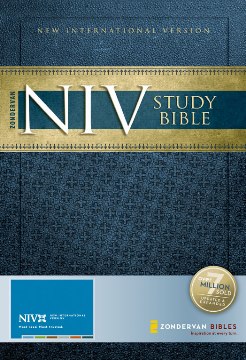 For the last year and half or so, I’ve been conducting an experiment of sorts. My church uses the NIV for all Scripture reading and preaching. But for the last four years I have used the ESV for all of my personal reading and study. So naturally I bring my ESV with me to church. This means that while my pastor is reading the Scripture text for that day (usually a lengthy passage) in the NIV, I am following along with the ESV. As it turns out, the two translations aren’t substantially all that different, so following along is pretty easy. I have noticed two major differences, however, both of which have caused me to move slowly back toward using the NIV for the majority of my Bible reading.
 The full text of Alvin Plantinga’s groundbreaking book, Warrented Christian Belief, is now available for free at Calvin College’s Christian Classics Ethereal Library (you can also purchase a pdf copy for only $2.95).
  Jesus commissioned His disciples to “Go therefore and make disciples of all nations, baptizing them in the name of the Father and of the Son and of the Holy Spirit, teaching them to observe all that I have commanded you.” (Matthew 28:18-20) This commission did not end with the disciples, but was multiplied through generations of disciples who sought to bring the good news to the ends of the earth.
 I’ve heard from a couple of readers of this series that these are their favorite lines of the carol. This should be something that resonates with every heart. Most of us certainly feel oppressed and enslaved at various times in ours lives.

 content rss
Recent Comments