 July 21, 2009 Posted by Roger Overton
 closeAuthor: Roger Overton
Name: Roger Overton
closeAuthor: Roger Overton
Name: Roger Overton
Email: rogeroverton@hotmail.com
Site: http://ateamblog.com
About: Roger Overton is currently pursuing a Masters degree at Talbot School of Theology. He has addressed various churches, schools and youth camps throughout the United States. Roger was co-editor of The New Media Frontier (Crossway, 2008) and God and Governing (Wipf & Stock, 2009).
Roger can be emailed at rogeroverton@hotmail.com.See Authors Posts (570)
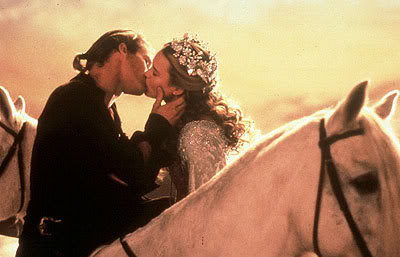
| The lead article in the current issue (Vol. 32, No. 3) of Christian Research Journal is “A Reconsideration of Romantic Love” by Rob Whitley. The following synopsis is provided by CRJ: |
|
“There are three main types of marriage: arranged, companionship, and romantic. Arranged marriage is heavily influenced by tradition, parental preferences, religious considerations, economic interest, and social relations. Companionship marriage relies more on a quiet friendship founded on shared temperament, common values, and mutual interest. Romantic love refers to a freely chosen, intense, and passionate union of two individuals bonded by “chemistry,” a union that is hypothesized to “complete” the other. … Christians should encourage a paradigm shift away from romantic love-based marriage toward a more outward-focused companionship marriage. This can provide a secure and permanent base from which couples can engage constructively with themselves, the church, the world, and most importantly with God, in whom all ultimately find their rest.”
Throughout the article Whitley makes important criticisms of the romantic love our culture holds so dear. He points out that people often look to their partner to fill the “God-shaped void” inside them, as described by Augustine. Even Christians, he says “are bordering on the idolatrous,” since some seem to be looking for some form of salvation through their relationships.
With the problem laid out, Whitley provides a solution: “a hybrid model of marriage that combines the most moral and healthy aspects of arranged, companionship, and romantic marriage. We must reject notions that there is a hierarchy of marriage with romantic love at its zenith and arranged marriage at its nadir.”
I think Whitley is about ninety percent correct- there is a dangerous dependency and worship of romantic love in our culture today, and it is shared by many Christians. Too many people get into relationships based solely on emotional or physical attraction with little thought to companionship or the wisdom of their community. And I agree that our response should be a model that synthesizes the best of these three views of marriage.
However, in his appropriate fervor for denouncing the false views of romance, I believe Whitley downplays a healthy sense of romantic love. At one point he claims that “romantic love is mainly a secular concept, though it is also expressed in Scripture. The Song of Solomon could be considered an extended poem on the topic of romantic love and an example of romantic marriage from the Old Testament could be that of Jacob and Rachel (Gen. 29).”
The Song of Solomon “could be considered” having something to do with romantic love? This is like claiming the Gospel According to Luke could be considered an account of historical events. Regardless of what view one takes of Song of Solomon, it should be easy to agree that describes romantic love in a positive light. In light of this, I’m also not sure how a Christian could claim that “romantic love is mainly a secular concept.” If romantic love was not created by God for our good and ultimately His glory, we should flee from it as we might a burning building. If it is mainly a “secular concept,” we should have nothing to do with it. But even Whitley sees some place for romance in marriage.
Toward the end of the article Whitley explains his vision of marriage in greater detail: “This outward-focused companionship marriage, with its healthy doses of Song of Solomon-type romance…” Relegating romance to “healthy doses” reveals that it holds a lower place in Whitley’s estimation compared to the other aspects of a good marriage. Surely he wouldn’t say that companionship should be found in “healthy doses.”
At one point Whitley reflects that “Companionship love (and marriage) is often considered a poor relation of romantic love among the young: a second-best option reserve for those who cannot obtain romantic love.” This attitude, in my opinion, is just as dangerous as seeing romantic love as a luxury or something only good in limited doses. It would be easy, after many failed attempts at romantic love, to swing to the other extreme and merely seek a companionship marriage. But it seems to me that both extremes, and either of them at the expense of community, are unhealthy and to be avoided.
My reaction is in part fueled by reflections on Brian Borgman’s Feelings and Faith, which I reviewed last week. He makes the case that God has emotions, and since we are made in His image, our experience of emotions is a reflection of who God is. Given that romantic love is viewed positively in the Bible, it seems to follow that there is an ideal form of romantic love that honors and glorifies God and includes many of the passions we associate with romance. If this is true, then Christianity is most certainly a fan of romance, and even in our appropriate criticisms of going too far with it, we ought not minimize its value.
 Posted in Culture, Gender Issues, Roger's Posts
  3 Comments »
July 20, 2009 Posted by Roger OvertoncloseAuthor: Roger Overton
Name: Roger Overton
Email: rogeroverton@hotmail.com
Site: http://ateamblog.com
About: Roger Overton is currently pursuing a Masters degree at Talbot School of Theology. He has addressed various churches, schools and youth camps throughout the United States. Roger was co-editor of The New Media Frontier (Crossway, 2008) and God and Governing (Wipf & Stock, 2009).
Roger can be emailed at rogeroverton@hotmail.com.See Authors Posts (570)
Since Walter Cronkite’s passing last Friday, many have remembered the critical moments in U.S. history which he reported on- such as the Apollo 11 landing and the assassination of JFK. He became known as the most trusted man in America due to his (mostly) impartial reporting- giving people the facts and letting them decided for themselves what to think of them. They turned to him for the news. They looked to him to know and understand what was going on in the world.

I believe Walter Cronkite’s death marks an important transition point in how news is transmitted and consumed. He became the first anchor of a nightly half-hour news program in 1963, becoming not just the anchor, but also the managing editor. What became broadcast news was his decision and so he became an important gate keeper of information. Certainly people could turn the channel or pick up a newspaper, but his straightforward reporting and integrity earned him the trust he accumulated over time.
Perhaps Edward Murrow began the trend with his weekly new program, See it Now, but many credit Cronkite with creating, by example, the role of the news anchor as a trusted source of information. In his line have been Dan Rather, Peter Jennings and Tom Brokaw. Today we see Brian Williams and Katie Couric filling the role, but it seems clear that something has changed.
We may look to folks like Williams and Couric for information, but not in the same way the nation turned to Walter Cronkite. The change is technological at its core, but sociological in substance. Today we have become the gatekeepers of the news we receive.
We no longer wait to hear the news on an evening program, we read about it on Twitter, RSS feeds and news aggregator sites (such as Huffington Post and Drudge). We rarely look to reporters as trusted authorities, we find the source of the information we’re after. This is partly motivated by mistrust for authorities, but mostly fueled by the ability to find only the news we want to hear, determine when we want to hear it and decide from where we want to hear it.
So there’s a way in which today’s generation is filling Walter Cronkite’s shoes. Not by donning a suit and appearing on television, but by becoming gatekeepers. We report the news we see through Twitter and blogs, and we consume the news we want through these new avenues of technology. Cronkite should be remembered well for showing us how to be a gatekeeper with objectivity and integrity. Though authority has shifted from select anchormen to the general public, much can be learned from the ethic to which he aspired. Where we go from here will be determined not just by technology, but also how we decide to use it. For better or for worse, that’s the way it is.
Posted in Culture, Roger's Posts No Comments »
July 15, 2009 Posted by David N closeAuthor: David N
Name:
closeAuthor: David N
Name:
Email: dvnilsen@gmail.com
Site: http://reasonfromscripture.blogspot.com
About: In 2003 I graduated from high school with no set direction for my life. I spent a year in Iowa before returning to California to attend Junior College. I changed majors 3 times; from Physics to Business to Film (as you can see, no direction). I was a Christian, attending church regularly, but furthering the cause of Christ in this fallen world was not a high priority.
In 2005 I picked up an issue of TableTalk magazine, and I was re-introduced to the work of R. C. Sproul (whom I had read once in high school). Later that year, while taking a biology class with an ardent atheist professor, I picked up a copy of Lee Strobel's "The Case For A Creator." In the Fall of 2006 I came to Biola University and was introduced to the works of J. P. Moreland and John Mark Reynolds. My fate was sealed.
Just a few years ago, I was passionless. Now I have two passions: Studying the Word of God and engaging in the task of Apologetics. 1 Peter 3:15 exhorts all Christians to be ready to give an answer for the hope that we have. My goal is to be able to give my answer articulately and powerfully, but even more importantly, in love. There are many purposes for apologetics, but by far the most important is the opening of minds and the softening of hearts for the work of the Holy Spirit. If we don't care about and pray for those with whom we engage in apologetics, we fail to fulfill this purpose. As a wise man once said, "Take a stand for the Truth, but do it in love fool!"
Education Info:
--Currently: M.A. in Historical Theology student, Westminster Seminary California
--2008: B.A. in Philosophy, Biola University
--2006: A.A. in Liberal Arts, Palomar CollegeSee Authors Posts (75)
Dr. Scott Clark has a great post over at the Heidelblog pointing out one of the hallmarks of American religion: An over-realized eschatology. This is what Luther referred to as the “theology of glory” (against his “theology of the cross”). Basically, an over-realized eschatology is one that thinks you can have Heaven on Earth, in some sense, before the return of Christ and the consummation.
I found this fascinating because I had always looked at Liberal Protestantism primarily in terms of what might be called a “theology of love.” In other words, I only saw one dimension to the problem, namely that liberal theologians tended to focus on the “love” of God (as they defined it, of course) and away from things like wrath and Hell. When you do this, of course, sin gets downplayed as well, and before you know it you’ve accepted homosexuality as merely an alternate lifestyle and you’re pushing for the ordination of homosexuals to church office (as is the case in the ECUSA). But a connection that I hadn’t made before was between Liberalism and an over-realized eschatology. It only makes sense, though, that if you believe you can have utopia on earth, you would make the church’s mission to be one of social justice rather than Gospel proclamation. In fact, when you combine the so-called “theology of love” with an over-realized eschatology, saving people’s souls from Hell (if it even exists) becomes entirely unimportant compared to saving trees and whales.
I would be remiss if I didn’t mention the alternate problem, that of caring too little about creation. This is a danger that we should avoid, but unlike what many modern people think, it has not always been a problem for Christianity. When asked what he would do if he knew the world would end tomorrow, Martin Luther famously said he would plant a tree! While such a response may be an example of Luther’s characteristic overstatement, it does show that a theology of the cross doesn’t need to be careless about this present age.
Posted in David's Posts 2 Comments »
July 13, 2009 Posted by Roger OvertoncloseAuthor: Roger Overton
Name: Roger Overton
Email: rogeroverton@hotmail.com
Site: http://ateamblog.com
About: Roger Overton is currently pursuing a Masters degree at Talbot School of Theology. He has addressed various churches, schools and youth camps throughout the United States. Roger was co-editor of The New Media Frontier (Crossway, 2008) and God and Governing (Wipf & Stock, 2009).
Roger can be emailed at rogeroverton@hotmail.com.See Authors Posts (570)
|
|
We find ourselves in a culture that seems dominated by emotions. Most advertising is geared toward motivating emotions. We are often told to “follow our heart,” which roughly means we should do what feels right to us. Unfortunately, there is little difference between the world and the church in this way. Many people choose churches based on how the service makes them feel. Christians often make decisions attributing their feelings to God with little or no thought given to applying God’s already revealed Word to their lives. It’s as though emotions are above being right or wrong. In Feelings and Faith Brian Borgman explains that emotions can have moral significance and he attempts to show how we can be filled with emotions that glorify God. |
After a brief introduction explaining and defining emotions, Feelings and Faith: Cultivating Godly Emotions in the Christian Life begins with the understanding that since we are made in God’s image, we must look to the character of God as our guide for our character, including our emotions. Borgman takes the view that God does have emotions (contra the “divine impassibility” view that has been held by many theologians). He consequently explores God’s emotions as revealed throughout the Bible and shows how the make-up of our emotions went astray due to the fall.
Our status resulting from the fall naturally leads to who we are in Christ. Borgman progresses to show the necessity of God’s authoritative truth for our complete sanctification. He contends that certain truths are essential to our transformation (he refers to them as “oxygen truths” as we cannot grow spiritually without them): the character of God, justification, and future glory. Also considered is how spiritual experiences should relate to our emotions and how the Bible can help us cultivate godly emotions.
The third section of the book gets rather practical by seeking the mortification of ungodly emotions. Borgman explores sinful anger, unforgiveness, fear and worry, and depression by carefully considering what the Bible says and providing a game plan to mortify the emotions.
The remainder of the chapters are focused specifically on cultivating godly emotions. Borgman spends quality time looking at the pattern Jesus set noting that “It belongs to the truth of our Lord’s humanity that he was subject to all sinless emotions.” (B.B. Warfield) He reflects on the necessary connection between biblical thinking and godly emotions and proceeds to discuss emotions as they relate to worship, preaching, relationships, Bible study and prayer, and meditation. The book concludes with an appendix returning to the question of divine impassibility. He contends that our view of God is diminished if we understand Scripture’s emotional descriptions of God as mere metaphors.
I know of only one other book that deals generally with thinking biblically about emotions. Yet, it is a subject to which Christians today desperately need to give more thought. So I am thankful to Brian Borgman not only for addressing this important subject, but for doing so in a way that is clear, biblically instructive, and immensely practical. Feelings and Faith reminds us that God wants to redeem our entire being- heart, soul, mind and strength that He has expressed the keys to the sanctification throughout the Bible.
Borgman avoids the dangers of exalting emotions too highly or denigrating them to having no place in the Christian life. Indeed, we ought to feel and we ought to feel rightly. Particular chapters struck me more than others, due to my own struggles and experiences, and readers will likely vary on which points they found most challenging. As a general treatise on the topic, Feelings and Faith is the sort of book I expect to return to throughout my life in an effort to cultivate godly emotions.
Posted in Book Reviews, Roger's Posts 1 Comment »
 OK, first a quick observation and thought: I find it interesting that if you are my age and go to the boys toy aisle at your local Wal-Mart or Target, you are struck with a serious experience of déjà vu. Virtually every type of toy you see is exactly the ones that you remember from when you were a kid: Star Wars, GI Joe, Transformers, DC and Marvel superheroes, and even an occasional Teenage Mutant Ninja Turtle. I think that the reason is timing, and long-term timing at that. I’m sure many helplessly nostalgic dads (like myself) walk into the toy section, think, “Hey, I remember this stuff!” and buy it for their kids so they can have the same cool toys. I think the toy manufacturers see the kids’ dads as a marketing target just as much as their kids, and are capitalizing on the fact that all those boys who played with lightsabers and staged huge GI Joe battles back in the 80s now demographically have boys of their own at just that age.
But that’s not really what this post is about, though it is loosely connected. It has been fun to see my two boys discover and enjoy Star Wars. Though they haven’t seen Episodes 2 or 3 yet (and won’t until they’re older and more mature), they’re hooked, and it is almost like seeing my own childhood replay before my eyes. Of course, they have something I didn’t (the new Prequels), and watching them as an adult with this new information has helped me to realize something interesting.

It is no secret that the Star Wars mythos is Eastern in orientation (no pun intended). This is easily seen in foundational concepts like an impersonal Force that binds the universe together, or an emphasis on calm, passivity, intuition and non-attachment as the good way and anger, fear, aggression and attachment as the evil way. This interpretation is attested by George Lucas himself, who intentionally patterned much of his galaxy far, far away after Eastern ideas, to the point that he originally planned on an all-Japanese cast.
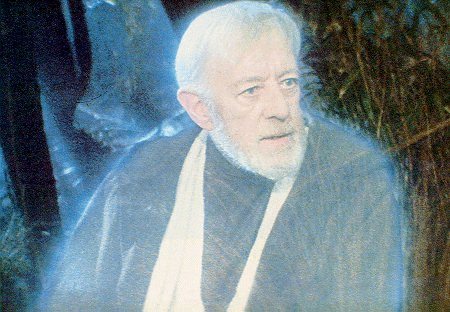 What struck me is that George Lucas couldn’t stay consistently within this worldview. One of the Eastern ideas present in his mythos is what happens to a person when they die – their life energy becomes one with the Force, and they lose their individual identity. For Lucas, however, this must not have been satisfactory. For his story to work, he had to figure out a way for some key figures to retain their identity after death (like Obi-Wan Kenobi). But if the goal of life is to become one with the Force in the end, why should you want to continue to exist as yourself? Moreover, how should you even be able to do so?
It’s interesting to me to see this very Western concept being used inconsistently within an otherwise Eastern worldview. Lucas reflects a common tendency in today’s popular culture – find the beliefs that work for you, and throw them together, regardless of how consistent they may or may not be with each other. This should be a telltale sign that something is amiss – a true view of the world should be consistent and not in tension with itself.
Posted in Aaron's Posts, Culture 4 Comments »
July 8, 2009 Posted by Roger OvertoncloseAuthor: Roger Overton
Name: Roger Overton
Email: rogeroverton@hotmail.com
Site: http://ateamblog.com
About: Roger Overton is currently pursuing a Masters degree at Talbot School of Theology. He has addressed various churches, schools and youth camps throughout the United States. Roger was co-editor of The New Media Frontier (Crossway, 2008) and God and Governing (Wipf & Stock, 2009).
Roger can be emailed at rogeroverton@hotmail.com.See Authors Posts (570)
I’m now taking pre-orders for my latest book, God and Governing: Reflections on Ethics, Virtue and Statesmanship. Apparently Amazon will not have it in stock for another 1-2 months, but if you order from me, you should have it by the end of July. Retail is $18. I’m selling them at $12, plus $3 shipping. Just use the Paypal button below. If you would like me to inscribe your book, please put instructions for how you would like it addressed in the comment section of your payment.
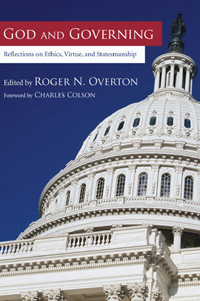 |
God and Governing ed. Roger N. Overton, Foreword by Charles Colson
$12, plus $3 shipping
|
Here are the details on the book:
God and Governing: Reflections on Ethics, Virtue and Statesmanship
Abortion. Poverty. Pornography. More than thirty years ago religious conservatives and liberals began fighting these and other problems head on. These past few decades have seen the popularity of groups such as the Moral Majority and The Christian Coalition that support numerous religious politicians and make even more promises. After all the potential for success, why is it that these social problems persist? How is it that evangelicals have been so ineffective at changing the political and social landscape of the United States in a positive way?
Based on a conference put together by Trinity Law School, God and Governing brings together theologians, politicians, law professors and cultural critics in order to examine some of the root causes of evangelical political failure over the past thirty years.
Contents:
Foreword: Charles Colson
Introduction: Roger N. Overton
Chapter One: Why Being Good is So Political by David F. Wells
Chapter Two: The Travails of Evangelical Politics by Paul Marshall
Chapter Three: The Golden Triangle of Freedom by Os Guinness
Chapter Four Lessons on Fleeing Temptation by Patrick Nolan
Chapter Five: The Future of Virtue and Statesmanship in Pagan America by Vishal Mangalwadi
Chapter Six: The Failure of Evangelical Political Involvement by Dallas Willard
Chapter Seven: Practical Ways Forward by Donald McConnell
Chapter Eight: A Trinitarian Model for Political Duty by Stephen Kennedy
Posted in Politics, Roger's Posts 2 Comments »
Dr. Habermas is one of my favorite people, and you can watch him in this short video giving one of my favorite arguments for the resurrection–the pre-biblical creed recorded in 1 Corinthians 15:1-8, which cites the death for our sins, burial, and resurrection of Jesus. The early dating of this creed at around five years after the resurrection (on average–many place it earlier) is commonly accepted and non-controversial. In fact, even Gert Ludemann dates the creed at three years after the resurrection, according to Habermas. And of course, beliefs always predate the formation of creeds, so we have evidence of extremely early belief in the resurrection, refuting the idea that the resurrection was a legend that developed at a later date. Pretty incredible stuff.
Posted in Amy's Posts, Apologetics No Comments »
July 6, 2009 Posted by Roger OvertoncloseAuthor: Roger Overton
Name: Roger Overton
Email: rogeroverton@hotmail.com
Site: http://ateamblog.com
About: Roger Overton is currently pursuing a Masters degree at Talbot School of Theology. He has addressed various churches, schools and youth camps throughout the United States. Roger was co-editor of The New Media Frontier (Crossway, 2008) and God and Governing (Wipf & Stock, 2009).
Roger can be emailed at rogeroverton@hotmail.com.See Authors Posts (570)
One of the most frequent responses to criticism of books like The Shack, Twilight or Harry Potter is that it’s just a story. It’s implied that fiction cannot be dangerous in any way because it’s all made up. I believe this is entirely misguided for two reasons: 1) We are affected by everything we take in, whether it’s fiction or non-fiction. 2) Simply because something is fiction it is not some how neutral, morally or otherwise.
Everything we take in affects us, for good or for ill. This is obviously the case with food. Good food provides us nutrients for our general health, while bad food harms our health. It is the same with ideas, whether they are found in a romance novel or in a philosophy book. One aspect of how we are affected is restricted by the genre- a philosophy book is not meant to entertain in the same way a romance novel is. So certain untruths are expected in a fiction, and it would be silly to claim that it’s immoral to expose people to such untruths (such as the existence of Mr. Darcy).
But there is a limit to where healthy fiction can go, and that is where what is being utilized is not simply untrue, but falsehood. It is the presenting of falsehoods, even in a fictional setting, that causes problems. Let’s take Star Wars as an example. Kids (and even adults) may pretend that they can grab things with the force. This is having fun with an untruth presented in the Star Wars universe (I do think using our imaginations is a healthy activity). But the danger is in adopting too much of the Star Wars worldview and imagining that I might be able to communicate with the dead (such as Luke does with Obi-Wan), which is expressly condemned in the Bible. This is the sort of thing I’m referring to as a “falsehood.” Far more serious is the development of a Jedi religion, in which tens of thousands across the globe believe.
We read or watch fiction in much the same way we interact with the real world. If it is well written, we identify with characters, sympathize with their problems, feel what they feel and hope for what they hope for. The more a fiction embraces falsehoods, instead of simply untruths, the more our minds our invited into a world that will affect our thoughts, feelings and beliefs in ways contrary to what God desires for us, thus it becomes unhealthy and immoral.
Some do argue that for these reasons, we should entirely avoid fiction that has any falsehoods, be it Harry Potter, Twilight, Star Wars or whatever. I think this is the wrong response. As I said, we interact with fiction in our minds in much the same way we do with the real world. We find things in the world that are good, neutral and bad for us, including people. When we hang out with ungodly people, we inevitably begin to adopt the same ungodly traits they exhibit. The opposite is true with godly people. But the important point here is that no one is perfect. Even with people we believe to be of good influence, they have imperfections that will be communicated. We cannot live in the world without being affected by unhealthy things to some degree, just as we cannot eat with taking in some ingredients that are unhealthy.
The proper response is not to withdraw from the world in solitude with only the Bible to feed and entertain us, just as the proper response is not to stop feeding as to avoid all unhealthy ingredients. We must eat, and we are called to go into the world as light in a dark place. Likewise, because there are unhealthy ingredients in fiction, does not mean we should avoid it all together.
Our response should be discernment. 2 Corinthians 10 tells us we are to “take every thought captive to obey Christ.” Everything we consume we are to weigh against what God has revealed as good and true and beautiful. If it fails, we are to discard it. We are to fill our souls with “whatever is true, whatever is honorable, whatever is just, whatever is pure, whatever is lovely, whatever is commendable,” etc.. This is a call to be wise about what we consume.
If we were to avoid all books that contain any falsehood, then we could only read the Bible. But I think that would obviously be drastic. As long as we are wise about what we read, as long as we are able to discern the untruths from the falsehoods, we should be able to consume all sorts of fictions for our entertainment and enrichment. The problem is that most people do not have this discernment. They begin to move things from the “falsehood” category to the “untrue” category, and this is exampled by people who have unwittingly adopted many of the ideas presented in The DaVinci Code. Because they have identified so much with the characters and their surrounding context, many readers have assumed the plausibility of ideas such as Jesus having a romantic relationship with Mary.
Simply because something is fiction does not mean it should be immune from criticism. Quite to the contrary, because fiction often hides falsehoods in ways difficult for us to discern it must be critiqued. “It’s just a story,” means we should be all the more vigilant about what it is exactly we are consuming so we can sort the good from the bad. Sometimes the fiction is so unhealthy that it should be avoided altogether, but there is much out there we should be able to take in with discernment in order to discard the bad and enjoy the good.
Posted in Book Reviews, Culture, Roger's Posts, The Da Vinci Code 1 Comment »
June 29, 2009 Posted by Roger OvertoncloseAuthor: Roger Overton
Name: Roger Overton
Email: rogeroverton@hotmail.com
Site: http://ateamblog.com
About: Roger Overton is currently pursuing a Masters degree at Talbot School of Theology. He has addressed various churches, schools and youth camps throughout the United States. Roger was co-editor of The New Media Frontier (Crossway, 2008) and God and Governing (Wipf & Stock, 2009).
Roger can be emailed at rogeroverton@hotmail.com.See Authors Posts (570)
|
|
Many readers are familiar with the classic Jane Austen novel Pride and Prejudice. But readers will find something slightly amiss when they read the first line of this version, “It is a truth universally acknowledged that a zombie in possession of brains must be in want of more brains.” The back of the book claims that “Pride and Prejudice and Zombies transforms a masterpiece of world literature into something you’d actually want to read.” |
Pride and Prejudice and Zombies is the result of some tinkering by Seth Grahame-Smith. Most of the original plot remains the same, but has been edited to feature fights with deadly zombies and ninjas. There are a few plot changes, such that two of the original characters die and one is severely crippled. What defined a person of good standing in the original was someone with money, manners, and good connections. In the zombie version, where one was trained in martial arts is equally as important.
Many of the occasions where the zombie plot is inserted are comical and well-done. Some heighten the original plot in a way that makes the tension more dramatic. One example is when Mr. Darcy first confesses his love for Elizabeth she attempts to kill him in defense of her family’s honor. Some of the zombie occurrences become predictable. Just about every time someone is travelling they come upon at least a few zombies that require some beheading or burning. There is one instance where Elizabeth encounters a zombie woman carrying a zombie baby, and she decides not to vanquish them. This odd encounter is never explained or revisited.
I’m probably one of the few people in the world who have never watched a zombie movie, so my expectations in regards to zombies may be skewed. I expected that there would be some resolution to the zombie plot- perhaps a final battle to kill all the zombies or destroy the source of the infestation- but no such resolution is provided. Zombies just happen to be attacking the English for no apparent reason and it seems that always will be.
I read Jane Austen’s Pride and Prejudice prior to the new zombie version so that I could compare the two. I found that the ways in which Seth Grahame-Smith edited and twisted the original were often brilliant and hilarious. However, I’m not sure those unfamiliar with the original would find Pride and Prejudice and Zombies as amusing. If someone is considering which version they should read, they should read the classic and be enriched by the masterpiece that it is. But most of those who have read Austen’s original, and have a sense of humor, will likely find Pride and Prejudice and Zombies a fun and worthwhile read as I did.
Posted in Book Reviews, Roger's Posts 1 Comment »
June 25, 2009 Posted by David NcloseAuthor: David N
Name:
Email: dvnilsen@gmail.com
Site: http://reasonfromscripture.blogspot.com
About: In 2003 I graduated from high school with no set direction for my life. I spent a year in Iowa before returning to California to attend Junior College. I changed majors 3 times; from Physics to Business to Film (as you can see, no direction). I was a Christian, attending church regularly, but furthering the cause of Christ in this fallen world was not a high priority.
In 2005 I picked up an issue of TableTalk magazine, and I was re-introduced to the work of R. C. Sproul (whom I had read once in high school). Later that year, while taking a biology class with an ardent atheist professor, I picked up a copy of Lee Strobel's "The Case For A Creator." In the Fall of 2006 I came to Biola University and was introduced to the works of J. P. Moreland and John Mark Reynolds. My fate was sealed.
Just a few years ago, I was passionless. Now I have two passions: Studying the Word of God and engaging in the task of Apologetics. 1 Peter 3:15 exhorts all Christians to be ready to give an answer for the hope that we have. My goal is to be able to give my answer articulately and powerfully, but even more importantly, in love. There are many purposes for apologetics, but by far the most important is the opening of minds and the softening of hearts for the work of the Holy Spirit. If we don't care about and pray for those with whom we engage in apologetics, we fail to fulfill this purpose. As a wise man once said, "Take a stand for the Truth, but do it in love fool!"
Education Info:
--Currently: M.A. in Historical Theology student, Westminster Seminary California
--2008: B.A. in Philosophy, Biola University
--2006: A.A. in Liberal Arts, Palomar CollegeSee Authors Posts (75)
This is a post I wrote two years ago when the first Transformers film hit theaters. Since Transformers: Revenge of the Fallen came out yesterday, I thought I would go ahead and re-post it. After I see the new film, I hope to review it as well.
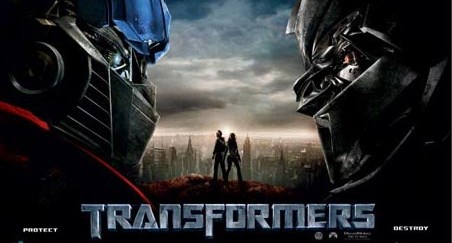
I feel the need to quickly share two things with you. First, Transformers was pretty much the coolest movie I’ve seen in a reeeaaallly long time. I felt like I was eight years old again, watching Jurassic Park for the first time. The movie was truly original in the quality and substance of its special effects, which is unique in this modern cinematic age where it is difficult to find a movie that is not 85% computer generated. It was also very entertaining, a perfect mix of action and humor. (Plus I’m a big geek that watched the cartoon and played with the toys when I was little, so there was a good deal of nostalgia involved as well! 😛 )
Second, (as the title of this post suggests) I feel that there is much more to this seemingly simple summer blockbuster than meets the eye. The movie shows quite clearly that, despite the apparent prevalence of naturalism and “postmodernism” in our culture, those worldviews are restricted to only the surface level of our cultural thinking (and reach down to the roots for only a tiny, elite minority of thinkers, most of whom are in the Universities). How did I come to that conclusion just by seeing this movie?
Take a look at some of the major characters and obvious themes of the movie. The good guys (the Autobots) fight selflessly for ideals like freedom and justice. Optimus Prime (the Autobot leader) is willing to sacrifice his own life to save a race of primitive, violent creatures (i.e. humans) for the sake of those objective values, especially freedom (In fact, some of Optimus’s speeches could have been delivered at a Young Republicans rally to drum up support for the war in Iraq!).
Contrast that with the bad guys. The movie’s writers described the character of Megatron (the Decepticon leader) as a “social Darwinist.” It certainly shows. If naturalism were true it would only be logical to conclude that, since the universe is nothing but physical matter bouncing around randomly, there are no objective values. Since this life is all there is, why not live however you want, free of moral restrictions? The closest thing to an objective moral value that naturalism can give us is survival, and Megatron’s philosophy is all about survival of the fittest (since, of course, he believes himself to be the fittest). Moreover, if naturalism were true and there were no objective values, then living creatures, such as human beings, would also have no inherent, objective value. When Optimus Prime says, “freedom is the right of all sentient beings”, you can be sure he isn’t a Darwinian Naturalist.
The same pretty much goes for (what passes, in popular culture, as) “postmodernism.” If postmodernism were true, then we couldn’t rightly condemn Megatron or the Decepticons for their actions. Certain objective values might constitute our truth, within our particular culture and “language game”, but that doesn’t mean they constitute their truth, within the Cybertronian culture and language game. Who are we to judge? But then, it’s hard not to be judgmental when someone’s trying to kill you.
The point is, though a lot of people today are fond of throwing around platitudes about moral relativism, and a lot of people think that science has shown us that the physical world is all there is, very few people actually live that way. Very few people practice what they preach. They still root for the hero. They still hope the villain is defeated. They still believe that beauty, truth and goodness are all worth fighting for. And that gives me a great deal of hope!
…by the way, in case I forgot to mention it, Transformers was awesome, go see it!
As you can tell, I really liked this move, so I have big hopes for the sequel. If you’ve already seen it, let me know what you thought in the comments (please NO spoilers! Thanks).
Posted in Culture, David's Posts No Comments »




 content rss
Recent Comments